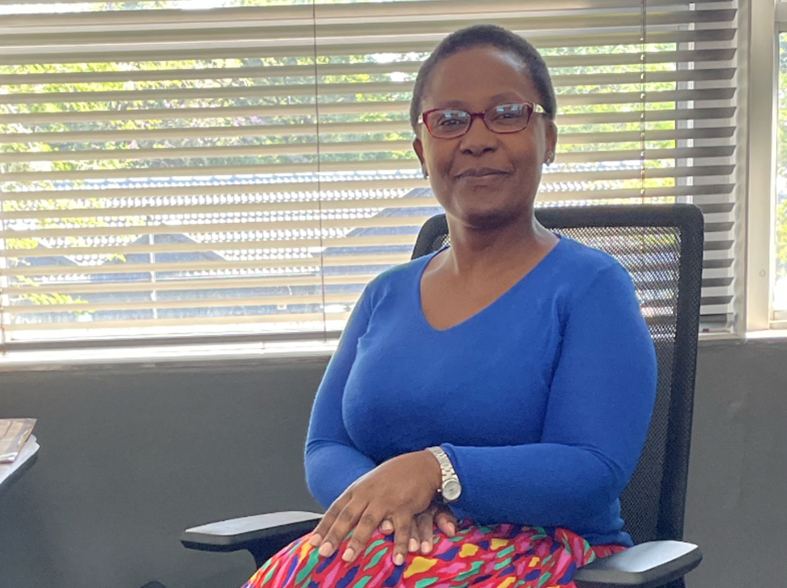
When people think of Human Resources, they often imagine disciplinary hearings, dismissals, or paperwork. But HR is much more than that—it’s about balancing the needs of employees with the goals of the business, managing compliance while ensuring that people feel valued, and adapting to constant changes in workplace culture. Few people embody this balance as well as Noluthando Mgotyibana, a Human Capital Manager with over two decades of experience.
Roots in the Eastern Cape and the First Step into the World of Work
Noluthando Mgotyibana’s career journey began far from the structured boardrooms and payroll systems she would one day master. Raised in the rural areas of Eastern Cape, she nurtured a dream of studying law, a passion that initially guided her academic path. However, like many South Africans navigating financial and personal challenges, her plans shifted. After completing matric, Noluthando pursued a bridging course through UNISA, enrolling in law studies before circumstances forced her to redirect her path. She later enrolled at GP College to study Public Relations—a move that would prove to be the first step toward her dual career in payroll and human resources.
Her entry into the workplace was through an apprenticeship at Queen International, secured via the Department of Labour. This was not just her first job, but her first encounter with the professional world. Placed in payroll, she quickly realized she had stepped into an environment that demanded precision, confidentiality, and responsibility. At the time, Noluthando didn’t know what a payslip looked like or how to send an email, but with mentorship and persistence, she grew into the role. What began as a junior position in payroll administration became a foundation for a career spanning more than two decades.
The Evolution from Payroll to HR
Payroll, while often seen as a back-office function, sits at the heart of every business. It is deeply connected to HR because it deals with one of the most important aspects of work: compensation. Noluthando discovered this link early in her career. As employees approached her with questions about retrenchment calculations, packages, and payslips, she realized her knowledge of payroll alone wasn’t enough. This curiosity pushed her to pursue further studies in human resources.
In 2016, she obtained her HR diploma from UNISA. But Noluthando wasn’t done. Encouraged by mentors and colleagues at HR Talk—a consultancy specializing in HR and payroll—she advanced to a BCom in Human Resource Management, with her employer supporting her studies. Today, she continues to push her academic journey further, currently pursuing her honours degree with the University of Johannesburg, with ambitions of a master’s qualification. For Noluthando, learning is a lifelong commitment. Every qualification has not only opened doors but also sharpened her ability to navigate the complex world of HR and payroll.
Balancing Structure and Humanity in HR
At present, Noluthando holds responsibility for both salaries and HR in her organization, wearing two demanding hats that require a balance of technical accuracy and human empathy. Payroll, with its deadlines and compliance demands, is relatively structured—tax submissions, PAYE reconciliations, and reporting all fall within predictable cycles. HR, however, is far less predictable. Promotions, addendums, grievances, and employee requests can land on her desk at any moment.
Her approach is anchored in confidentiality, fairness, and alignment between business goals and employee needs. She believes employees should feel valued, supported, and heard, while also understanding the “why” behind organizational decisions. Open-door policies, recognition programs, and consistent feedback loops, she explains, are key to building trust across management levels.
Importantly, Noluthando is quick to point out a cultural challenge still prevalent in many South African companies: the perception that HR is only about discipline. For too many employees, an HR visit signals trouble, when in fact, the role of HR is also about wellbeing, preventing burnout, and ensuring employees thrive.
Technology, AI, and the Future of Work
The world of HR and payroll is evolving rapidly, with technology leading the way. Noluthando acknowledges that automation, digital systems, and AI are transforming how professionals in her field work. Where once a task might take several days, modern systems can now complete it in minutes with fewer errors. She embraces these tools, not as replacements for human work, but as enhancers of efficiency.
Yet, she insists that human judgment and empathy remain irreplaceable. Technology can process data, but it cannot replace the sensitivity required to handle a retrenchment conversation, guide an employee through a grievance, or build trust between staff and management. Her advice to professionals is clear: embrace technology, upskill continuously, and see every new system as an opportunity for growth rather than a threat.
Lessons for Aspiring HR and Payroll Professionals
For young professionals entering the HR or payroll field, Noluthando offers both practical and philosophical advice. On the practical side, she emphasizes the value of templates, checklists, and automation to save time and reduce errors. Building strong relationships with finance and IT departments, she adds, can also make the job more seamless. On the personal side, she stresses adaptability—embracing every change as a chance to grow.
Persistence, she believes, is the key to building a lasting career. For those who feel stuck, her advice is to start small: take a short course, find a mentor, or learn a new skill. Growth, she says, doesn’t have to happen all at once, but even small steps create momentum toward bigger opportunities.
Redefining HR Culture in South Africa
Looking back at her journey, Noluthando sees her career as proof that growth never stops, and opportunities come to those who remain curious, persistent, and adaptable. From a young woman who once dreamed of becoming a lawyer, to a seasoned HR and payroll leader shaping workplace culture, her story underscores the evolving role of HR in South Africa.
As companies continue to face global shifts—from digital transformation to changing employee expectations—professionals like Noluthando remind us that at the heart of every system, process, and policy are people. And it is this balance between structure and humanity that defines the future of work.