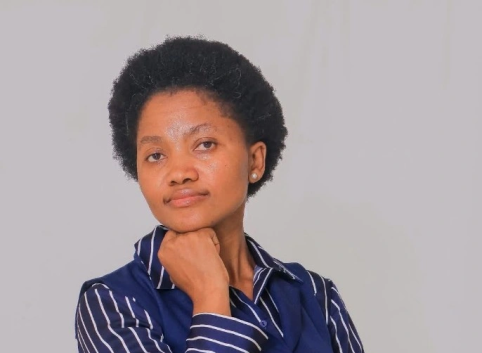
When Nomawele Njongo first put pen to paper, she had no idea her personal story would spark a Pan-African literary movement. What began as a memoir became the foundation of KwaziThina Publishers—a bold, unapologetic platform amplifying African voices and mentoring the next generation of storytellers. From self-funding her debut to hosting international literary festivals and youth book initiatives across over 30 countries, Nomawele is not just publishing books—she’s rewriting Africa’s narrative.
The Birth of a Vision
When Nomawele Njongo released her autobiography, Abortion by the Womb of Democracy, in 2019, she wasn’t thinking about starting a publishing empire. She was simply trying to tell her story—raw, unfiltered, and authentically African. But in that moment, a spark was ignited. “What began as a family endeavor deepened when my teenage sons, Kwazi and Thina, joined me in 2020, each writing their own books,” she shares. “Their passion and unique perspectives moved me so profoundly that their names became the heart of our publishing house: KwaziThina Publishers.”
But what truly shifted everything was the unexpected flood of unsolicited manuscripts from aspiring African writers. “These submissions were a revelation—a clear signal that the hunger for an authentic, African-owned platform was far greater than I’d imagined,” she reflects. And by 2021, what started as a family-led writing journey had transformed into KwaziThina Publishers, a fully-fledged publishing house rooted in African identity, purpose, and vision.
A Lifelong Affair with Words
Nomawele’s story didn’t start in a boardroom or behind a publishing contract. Her love affair with words began in childhood, long before she understood the power they held. “I used to write stories in the air with my finger as we played games. They called me ‘umabhalani’,” she recalls with warmth. Her creativity took tangible form in high school, where she filled notebooks with poetry and prose, participated in literary competitions, and began to understand the profound influence of narrative.
Despite enrolling in accounting at UNISA, life had other plans. Her path twisted through volunteer work at the Department of Social Development and a Parliamentary Constituency Office in Lusikisiki. “I typed letters for constituents and saw how personal stories become political concerns,” she says. At Parliament, she served as an administrative assistant to MPs like Bertha Gxowa, and later worked at Luthuli House as PA to Tony Yengeni. “Political education showed me narratives shape nations.”
Her educational journey was non-linear but rich: a Project Management Diploma from Oxbridge Academy, certifications in bookkeeping and office administration, and finally, Public Management at South West Gauteng College. She later became a Sales Team Leader at PSB Network, but the corporate world couldn’t quiet the storyteller within. She left it all to explore crypto marketing and clothing sales—eventually selling her shares to fund her debut book.

A Mission Bigger Than Publishing
At the heart of KwaziThina Publishers is a simple but revolutionary belief: African stories, told by Africans, have the power to transform the world. “We publish diverse genres including fiction, nonfiction, poetry, essays, and short stories,” she says. But the mission is larger than just putting books on shelves. “We believe in publishing books as catalysts for change, amplifying underrepresented narratives, and shaping the future of literature and education across Africa and its global diaspora.”
Their value proposition is clear: a holistic literary ecosystem. KwaziThina doesn’t just publish; it nurtures communities. Their initiatives like the Funda Mpondo Literary Festival, held annually with themes like “Brewing Stories, Building Community,” bring together writers and readers in celebration of heritage and storytelling. Partners include Walter Sisulu University, Magwa Tea SA, and the Department of Basic Education.
The Africa Teen Authors Book Initiative (ATABI) is another cornerstone, mentoring over 329 teens from 31+ countries and producing five multilingual anthologies. “ATABI is about nurturing the next generation of literary voices,” she explains. With creative workshops, international chapters in South Sudan, Cameroon, and Malawi, and collaborations with scholars and PhDs, the program continues to grow in scale and impact.
Resilience in the Face of Challenge
Every entrepreneurial journey is fraught with challenges, and publishing in Africa presents its own unique set. “Breaking into global markets was daunting,” Nomawele admits. But she pushed forward, building a strong international presence through events like the Turin International Book Fair in Italy.
Resource limitations and building credibility were two other steep mountains to climb. “We developed an innovative collaboration model, leveraging partner strengths and shared platforms,” she explains. Strategic alliances with academic institutions, government agencies, and international organizations have bolstered KwaziThina’s profile and reach.
One of the most defining projects has been the Corridors of Democracy anthology, a partnership with the National Youth Development Agency. The essays, written by high school students and reviewed by Tshwane University of Technology scholars, commemorate 30 years of democracy. “It was a powerful reminder of how youth perspectives can enrich national narratives.”
The Global Stage
Visibility has been a deliberate strategy. “Branding for us meant pushing boundaries,” she says. With global partnerships and local storytelling at its core, KwaziThina continues to scale. Events like the KTP Lit Gala, with guests from the US Embassy and Brand SA, amplify their international presence. “We are cultivating an entire literary movement,” she says proudly. “While others focus on books, we focus on ecosystems.”
The Woman Behind the Mission
So how does one balance being a mother, entrepreneur, writer, and cultural leader? Nomawele leans on discipline, purpose, and her community. “As a multi-award-winning entrepreneur and writer, I’ve learned to blend creativity with strategy,” she says. Her daily life is a juggling act, but one grounded in resilience and a deep belief in the work. “The most important lesson I’ve learned? Authenticity. Never compromise on your story. That’s what keeps me going.”
Looking Ahead: The Future of KwaziThina
Looking ahead, Nomawele envisions KwaziThina Publishers as a continental powerhouse. In five to ten years, she plans to expand their reach into more African countries, publish in additional languages, and deepen their work in education and literacy.
Her advice to aspiring authors and entrepreneurs is simple yet profound: “Your story matters. Don’t wait for permission to tell it. Build the platforms if they don’t exist—and tell the truth, even if your voice shakes.”
Through her work, Nomawele Njongo has not only created a publishing house—she’s sparked a movement. One that affirms the richness, resilience, and brilliance of African voices.
This is not just the story of a publisher; it’s the story of a movement. Nomawele Njongo is not only rewriting African literature—she’s ensuring the pen stays in African hands.