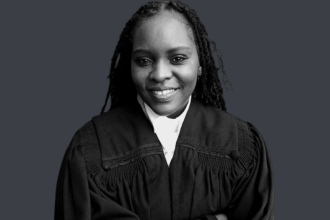
Lerato Motlhabi is the kind of legal mind that doesn’t just interpret the law — she investigates the spaces where it’s being bent, broken, or ignored. As a Forensic Investigations Specialist and Certified Fraud Examiner, Lerato operates at the intersection of law, finance, and ethics. Her journey began with a childhood dream of becoming a judge, evolved into a legal degree, and took a sharp, purposeful turn into the world of forensic advisory. Today, she leads high-level investigations, uncovers corporate fraud, and helps organisations build stronger compliance systems.
From Legal Aspirations to Investigative Depth
Lerato Motlhabi’s journey into the world of forensic investigations didn’t begin in a courtroom but in front of a television screen. “Growing up, I aspired to be a judge, inspired by legal TV shows during my primary school days,” she reflects. That childhood dream led her to pursue an LLB at the University of the Western Cape. But as many graduates quickly learn, the transition from qualification to career can be steep.
After struggling to find a firm to serve her articles, Lerato took to LinkedIn in a bold and vulnerable move — a post asking for a chance. “Fortunately, a CEO of a law firm messaged me on LinkedIn and offered me the opportunity to serve my articles,” she recalls. It was more than a lifeline; it was the start of a remarkable pivot in her legal career.
As fate would have it, the law firm had just established a forensic department, and Lerato was only the second person to join it. “Naturally, I soaked up the knowledge and expertise shared by my boss, who extensively trained me. I learned immensely from her experience and skills, which have significantly shaped me into the legal forensic professional I am today.” Though she had the option to rotate into other departments, she chose to remain. “I instantly fell in love with investigations.”
The Heart of the Work: Fraud, Evidence & the Truth
Lerato’s work now spans both public and private sectors, uncovering corruption, investigating fraud, and drafting vital compliance documents like Anti-Money Laundering policies. Her unique legal background allows her to blend financial forensics with a strong understanding of regulatory frameworks. “Tracing funds is a key aspect,” she explains, “but there is also a critical legal element involving the application of laws and frameworks that may be contravened.”
In navigating both sectors, Lerato has identified clear distinctions in approach. “The public sector tends to be reactive, responding to fraud after it occurs, whereas the private sector is proactive, anticipating potential vulnerabilities and strengthening control systems to prevent fraud.” Complicating public sector investigations further are outdated policies and systems that don’t always align with modern financial crime tactics.
One of the most consistent red flags Lerato sees in financial misconduct cases is a lack of documentation. “Requested documentation is often found to be incomplete, missing, or concealed — a clear indicator that something’s being hidden.” It’s these subtleties — absence rather than presence — that often lead to the most damning conclusions.
Designing Compliance and Crafting Policy
As part of her advisory work, Lerato has been involved in the development of Anti-Money Laundering (AML) policies, which she views as crucial safeguards in any organisation. “It is crucial to conduct a thorough risk assessment specific to your organisation,” she advises. Effective AML policies should cover customer due diligence, transaction monitoring, reporting suspicious activity, and ongoing improvement protocols. These aren’t just legal necessities — they’re shields against reputational ruin.
Her work reflects a broader understanding: that compliance is not just a box-ticking exercise but a dynamic process requiring constant vigilance, risk assessments, and legal clarity.
The Skill Set Behind the Scenes
Lerato doesn’t hesitate when asked what it takes to thrive in her line of work. “On the technical side, strong analytical skills, attention to detail, forensic tools proficiency, and effective report writing are essential,” she says. “On the personal side — critical thinking, communication, integrity, time management, emotional intelligence, and teamwork.”
These aren’t just buzzwords. In a space where clients often have millions at stake and reputations on the line, soft skills are just as critical as technical ones.
Becoming a Certified Fraud Examiner (CFE) added another layer to her professional armour. “Having a CFE certification does not just make me a skilled forensic investigator; it also equips me with the expertise and credibility… It’s become increasingly sought after by employers due to its recognition as the gold standard.”
Challenges Facing the Field
Despite advances in the profession, Lerato acknowledges the systemic challenges that persist. Chief among them is the vulnerability of whistleblowers. “They often provide credible information that substantiates allegations, particularly those related to large-scale fraud,” she says. “But in South Africa, there’s a lack of adequate protection, even though whistleblowers are crucial in cases involving millions of rands.”
This vulnerability not only endangers the individuals who come forward but can also deter future disclosures — undermining entire investigations.
To stay ahead in an ever-evolving landscape, Lerato prioritises professional development. “I plan to pursue a Digital Forensic certificate to enhance my ability to tackle complex cases and deliver high-quality results.”
Advice to the Next Generation
Lerato believes that aspiring professionals should start with a solid foundation — the LLB — but then specialise. “To stand out, I recommend complementing the degree with a Certified Fraud Examiner certification,” she advises. “Employers are increasingly looking for specialised skills.”
For those starting out, her advice is clear: “Remain curious, stay committed to ongoing learning, and prioritise developing a strong foundation in both technical and soft skills. Consider specialising in a specific area such as digital forensics or fraud examination.”
Her biggest lesson so far? Adaptability. “The field is constantly changing — staying updated is not optional, it’s essential.”