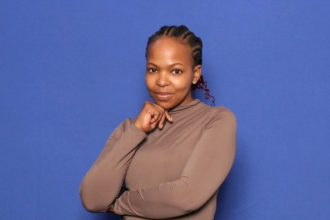
For many people, careers unfold in straight lines. For Athenea Faye, the path was anything but linear. It was shaped by detours, deep self-doubt, courage, sacrifice, and ultimately, purpose. Her story is not only about becoming a clinical psychologist—it is about unlearning limiting beliefs, confronting fear, and choosing growth at a stage in life when many believe it is “too late” to start over.
Today, Athenea runs her own clinical psychology practice, works in trauma-related emergency response, and supports individuals, couples, children, families and communities. But her journey began decades earlier, with a single sentence spoken by a teacher that quietly reshaped her sense of self.
The Belief That Almost Defined Her Life
At just 14 years old, Athenea was told by her Grade 9 maths teacher to “do us both a favour and don’t take maths.” What may have seemed like a passing comment became a deeply internalised belief—that she was not intelligent enough, that university was not for her, and that her academic potential had a ceiling.
At an all-girls school where subject choices determined future access to university, this moment had lasting consequences. Not taking maths meant not qualifying for a bachelor’s pass, effectively closing the door to higher education. For nearly two decades, Athenea lived with the belief that she was “stupid,” despite consistently excelling in other subjects and remaining deeply curious and committed to learning.
It’s a story she now hears echoed in her work every day—children and teenagers burdened by words spoken by authority figures, carrying those beliefs long after the moment has passed.
Starting Over at 36: The Courage to Try
At 36 years old, a casual conversation changed everything. While speaking to someone studying towards a degree, Athenea expressed admiration, only to be met with a simple but life-altering response: “You can do it too.”
For the first time, she learned about age exemption—an alternative route into higher education for mature students. That knowledge planted a seed of courage. She applied to UNISA, was accepted, and enrolled initially for a Bachelor of Education before transitioning into psychology.
What followed was unexpected. Athenea didn’t just cope—she thrived. As she progressed through her undergraduate studies, she began earning distinctions. Slowly, the belief that had shaped her identity for 20 years began to unravel. Psychology introduced her to the concept of multiple intelligences, helping her understand that mathematical ability is not the sole measure of intelligence. Her strength lay in interpersonal understanding, insight, and emotional intelligence.
She completed her bachelor’s degree cum laude, a moment that forced her to fully confront the lie she had believed for most of her life.
Eleven Years, Three Degrees, Endless Rejection
What many people don’t realise is how demanding the journey into clinical psychology truly is. Athenea continued into honours and then faced the most competitive stage of all—master’s training in clinical psychology.
In her first year of applying, she was rejected by three universities. In the second year, she applied to twelve, interviewed at four, and received eleven rejections. Out of a pool of approximately 750 applicants, only ten candidates are typically accepted per institution.
Being selected is not just an academic achievement—it is a rigorous process of evaluation, emotional resilience and endurance. When Athenea was finally accepted, it marked the culmination of years of persistence, self-belief and resilience.
From the moment she started studying at 36, it took 11 years to complete her undergraduate degree, honours, master’s, internship and community service. Every step required sacrifice.
Corporate Life: Understanding People, Power and Culture
Before entering clinical practice, Athenea spent many years in the corporate world working in organisational development, change management, coaching and leadership development. Alongside her psychology studies, she completed additional qualifications in change management and organisational development, studying and working concurrently.
This work took her across South Africa and into countries such as Uganda, Kenya, Nigeria and Ghana, where she facilitated leadership development programmes focused on culture, values and transformation. One of her most impactful projects involved servant leadership—helping teams move away from rigid, command-and-control management styles towards more humane, values-driven leadership.
These experiences shaped her understanding of human behaviour within systems, reinforcing a core truth she still sees today: culture shapes people, and dysfunctional environments often create distressed individuals.
Choosing Integrity Over Comfort
Leaving corporate was not an impulsive decision. It came from a growing sense of misalignment. Athenea found herself teaching values and transformation while watching teams return to environments that contradicted those ideals. The gap between what was being taught and what was being lived became too wide.
Integrity mattered more than comfort. As she waited for acceptance into her master’s programme, she made the decision to step away from traditional corporate roles and begin working independently, allowing her to commit fully to her studies and future practice.
Clinical Training: Confronting the Self
Clinical psychology training is often described as one of the most emotionally demanding professional paths—and Athenea’s experience was no exception.
Her training required multiple relocations: from Johannesburg to Durban for her master’s year, to Cape Town for internship, and back to Johannesburg for community service. Each move meant leaving family, support systems and familiarity behind.
During internship, she worked in acute psychiatric units, outpatient departments and forensic settings. She was constantly observed, evaluated and challenged by supervisors. Feedback was often direct and difficult to hold, especially when it impacted future registration and career prospects.
Working in psychiatric facilities exposed her to the deepest realities of human suffering. It required confronting fear, judgment, vulnerability and the limits of one’s own emotional endurance.
Forensic Psychology: Seeing the Human Behind the Label
One of Athenea’s most impactful rotations was in forensic psychology. Here, she worked with patients undergoing psychiatric observation after committing offences while mentally unfit to stand trial.
Rather than seeing “criminals,” she worked with patients—people whose actions occurred in the context of severe mental illness, psychosis or substance-induced states. Through therapy and group work, she witnessed remorse, grief, denial and accountability in all its complexity.
This experience reinforced her belief in seeing the human being first, not the label—a philosophy that now underpins her clinical work.
The Heart of Her Work: Bringing Order to Chaos
Today, Athenea describes her role simply: bringing order to chaos. Clients often arrive feeling overwhelmed, emotionally fragmented and unsure of themselves. Her work helps them make sense of their experiences, rebuild self-worth and understand how past trauma, family systems and environments have shaped them.
She works extensively with trauma, grief, neurodivergence, autism, ADHD, family dysfunction and adolescent mental health. She is particularly drawn to moments of vulnerability—spaces where people are raw, honest and deeply human.
Her days are never predictable. One morning may involve workplace culture consultations, the next an autism assessment, grief counselling, adolescent therapy or emergency trauma response.
Holding Space for the Hardest Conversations
A significant part of Athenea’s work involves supporting individuals experiencing severe emotional distress, including suicidal ideation. She speaks openly about the importance of reducing stigma and creating safe spaces for these conversations.
Her approach is grounded in compassion, realism and responsibility—helping clients feel seen while also ensuring safety and appropriate care when risks are present. She emphasises the importance of early intervention, recognising behavioural changes, and seeking help through accessible healthcare systems.
Caring for the Caregiver
Working in mental health requires constant self-awareness. Athenea prioritises supervision and her own therapy, recognising that psychologists must process their own experiences separately from their clients.
She is candid about the risk of burnout and the ongoing challenge of balance. Hiking, walking, family time, sleep and routine help her stay grounded—though she admits balance remains a work in progress.
Looking Ahead: Education, Writing and Balance
Athenea’s love for learning has never faded. She is currently preparing to publish her first children’s book—a story about a giraffe named Jeff who learns to feel his feelings—designed to help children understand emotional avoidance in an accessible way.
She also dreams of pursuing a PhD, while acknowledging the importance of balance before taking on such a demanding commitment. Ultimately, her vision for the future is one of sustainability: fewer practice locations, healthier working hours, and continued personal growth.
A Final Reminder: The Time Will Pass Anyway
If there is one message Athenea’s journey makes unmistakably clear, it is this: it is never too late. Time moves forward regardless. The question is what we choose to do with it.
Her life stands as a powerful reminder that purpose is not always discovered early—it is often grown into, through courage, persistence and an unwavering willingness to begin again.