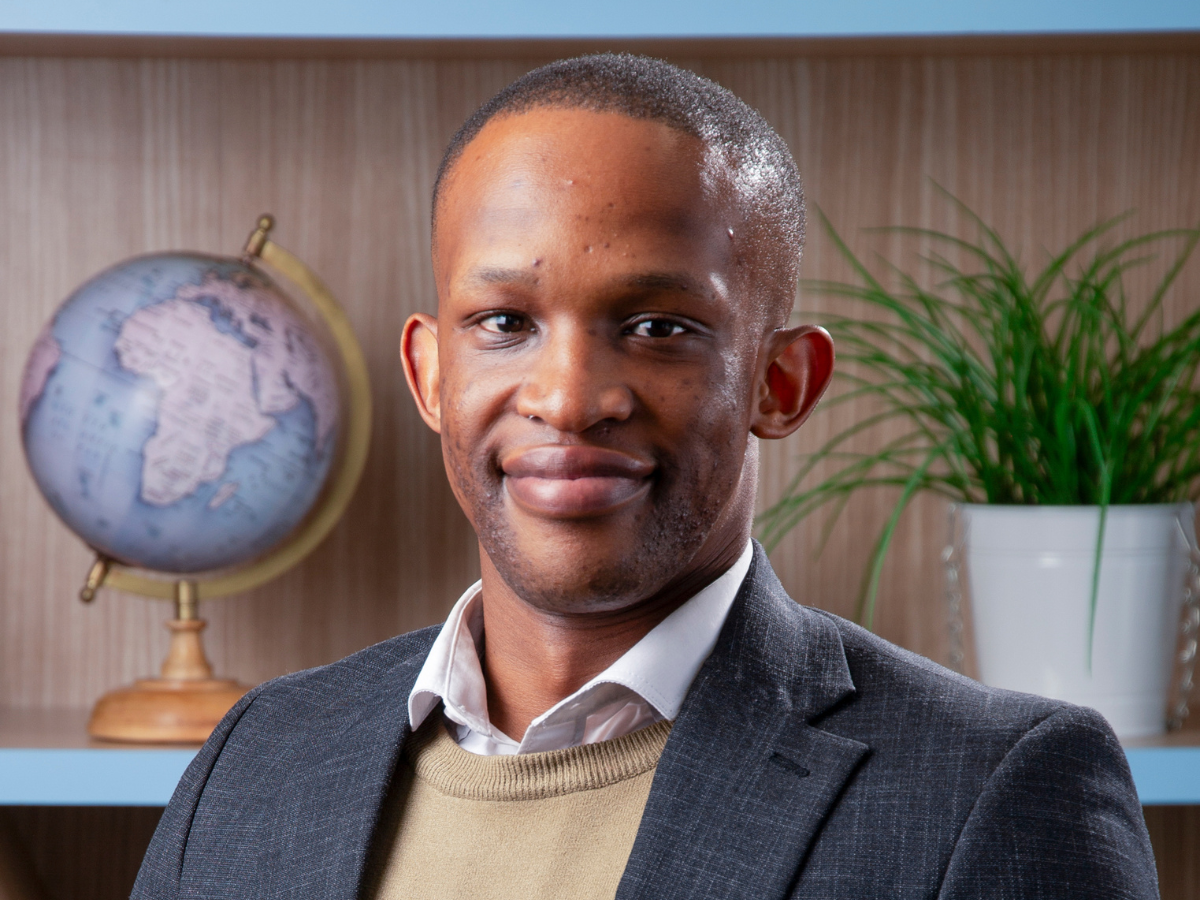
Becoming a Chartered Accountant is often spoken about as if it is a straight road: study hard, pass your exams, complete articles and step into a successful career. But for many people on the journey, the reality is far more demanding. It is a path shaped by pressure, delayed timelines, hard decisions, self-doubt and resilience. Anele Dumse’s story is a reminder that the CA route is not only about academic excellence. It is also about character.
Today, Anele is a Chartered Accountant and Finance Manager working in the venture capital and impact investing space. His career has taken him through audit, fund administration and advisory, giving him a broad view of finance beyond the classroom. But behind the title is someone who describes himself as “the opposite of the typical CA” — an extrovert, a people person, a football lover and an optimist who believes in showing up with a smile.
A Career Choice That Changed Late — But Made Sense
For Anele, becoming a Chartered Accountant was not always the plan. In fact, engineering was initially the direction he thought he would pursue. Like many young people, he imagined himself following one of the more traditional professional routes. But in matric, something shifted.
In November of his final school year, he told his parents he no longer wanted to study engineering. He wanted to become an accountant instead. The change may have come late, but it was not random. He had always been drawn to business, economics and the corporate world. Watching his father work in corporate South Africa and reading newspapers that kept him informed about current affairs helped shape that interest from an early age.
“I knew I wanted to be in corporate,” he reflects. “Even when I wanted to be an engineer, I wanted to be an engineer in corporate.”
Accounting also became one of the subjects that responded well to effort. The more he applied himself, the more he enjoyed it. A teacher helped ignite that interest further, and the combination of exposure, curiosity and performance gave the CA path real meaning.
University Taught Him Discipline the Hard Way
Anele’s academic journey took him to the University of the Western Cape, where he completed his undergraduate studies in accounting, before later pursuing postgraduate studies at the University of KwaZulu-Natal. Those years shaped him deeply, but not because they were easy.
In high school, he admits he was capable but not always disciplined. He could get by without fully applying himself, and that created a false sense of comfort. University quickly corrected that. His first accounting assessment at UWC was a wake-up call. He went in assuming his high school knowledge would carry him, and he failed.
That failure forced him to confront a new reality: effort could no longer be optional. From that point, he became more focused, more disciplined and more goal-driven. University taught him how to work with structure and intention, and how to pursue long-term goals rather than rely on natural ability alone.
“If I didn’t apply myself, I didn’t pass,” he says plainly.
That lesson would become one of the foundations of his entire career. It also shaped how he now advises others. For Anele, success on the CA path is less about brilliance and more about discipline, repetition and consistency.
The Support System Behind the Grind
One of the biggest advantages Anele had during his studies was a strong support structure at home. He lived with his family throughout university, and he speaks openly about how much that mattered. His parents valued education and created an environment where he could focus, while his older brother became someone he could lean on when varsity became overwhelming.
When the workload intensified, he never had to carry it alone emotionally. He could go home, speak honestly about what he was going through, and receive perspective from people who cared about him. That support helped him survive the emotional side of the journey.
He also recognised that mindset mattered. His optimism became part of his coping strategy. Rather than seeing failure as the end, he trained himself to see it as feedback. That mentality, paired with family support, kept him moving forward even when things became discouraging.
“I always knew that if something didn’t go my way, it wasn’t the end of the world,” he says. “It just meant I had to show up better next time.”
The Year That Broke Him — And Rebuilt Him
If undergraduate studies taught Anele discipline, postgraduate studies taught him resilience. CTA pushed him harder than anything he had experienced academically. While he completed his undergraduate degree successfully, postgraduate study did not unfold according to plan. In fact, he completed it over multiple years.
He first tried a different study setup that did not suit him, then moved to Durban and enrolled at UKZN. But even there, the pressure was intense. He failed his first year of CTA, and the moment that hit hardest was realising he had failed before the final supplementary exam even mattered. He knew, while still in the process, that the year was lost.
That experience shook him. It was the first time he had failed a full academic year, and it forced him to confront a painful truth: being smart was not enough. Confidence without the right systems, technique and work ethic would not carry him.
“It broke me,” he says honestly. “It was probably my toughest year academically.”
But the setback also changed him. It forced him to ask himself why he was doing this in the first place. He went home, regathered himself and recommitted to the bigger goal. That moment marked a shift from simply wanting success to becoming someone willing to endure difficulty for it.
Articles: Prestige, Pressure and Professional Growth
Like many aspiring CAs, Anele was drawn to the prestige of the Big Four. He knew the firms carried weight, and he wanted that training ground. Eventually, he joined PwC after being courted by more than one firm, and part of the decision came down to something very practical: proximity to home and the support structure that came with it.
What he found in articles was exactly what many trainees are warned about, and more. The hours were brutal. The pace was relentless. The demands of audit were far heavier than he had imagined, even after surviving CTA. He describes it as one battle after another.
There were times when work consumed nearly every day of the week. He had to learn how to prioritise across multiple audits, manage deadlines and sometimes go back to clients after mistakes had been made. That experience sharpened his planning, forced him to communicate honestly, and made him more aware of how important relationships are in professional environments.
Yet articles were not only difficult. They were also deeply formative. He built friendships that lasted beyond the firm. He developed confidence in dealing with clients. And he discovered that people skills matter just as much as technical knowledge in corporate life.
“Your expectations don’t matter,” he says of articles. “It’s tougher than you expect. But when you come out the other side, you’re very good at what you do.”
Staying Human in a Demanding Profession
One of the most interesting parts of Anele’s story is how intentionally he has worked to remain himself. He openly challenges the stereotype that the CA path only suits rigid, emotionally distant or hyper-traditional personalities.
He understands where that stereotype comes from. The profession does attract high achievers, and in demanding environments, emotional intelligence is not always prioritised. He has seen managers who were harsh and difficult, but he has also seen leaders who were kind, grounded and effective. Those examples helped him decide what kind of professional he wanted to become.
A senior manager once gave him advice that stayed with him: “Don’t let this profession change you.”
He took that seriously. As he became more senior, he made it a point to support trainees, advocate for others and especially look out for those navigating difficult environments. He wanted to be firm when necessary, but never lose empathy. For him, leadership is not about becoming cold. It is about being dependable, fair and true to your values.
“There’s a place for all of us in corporate,” he says. “You can remain true to yourself.”
Board Exams, Setbacks and the Fight to Finish
If the academic years and articles were difficult, the board exams added another layer of mental strain. Anele passed ITC on his first attempt, largely because he had already started preparing for it while repeating CTA. He approached it with a long-term mindset and trusted the notes and systems he had built.
APC, however, was a different story. He failed it more than once.
That period tested him deeply because he believed practical experience would carry him through. When it did not, he had to examine what was actually going wrong. Eventually, he realised that the issue was not only technical knowledge. It was exam technique.
That insight changed everything. Instead of blindly repeating the same preparation style, he started identifying patterns in his mistakes. He became more intentional about targeting weak areas, rather than only reinforcing strengths.
He also had to rebuild his confidence. He watched motivational videos, used affirmations, read books that helped him think differently about failure, and allowed himself to feel disappointment without letting it define him.
“I was too close to the finish line to give up,” he says.
That mindset carried him through. For anyone listening who has had to repeat an exam, that part of his journey is one of the most powerful. He does not glamorise failure, but he does show that setbacks do not have to end the story.
What Qualifying Really Meant
When Anele finally qualified as a CA(SA), it was more than a career milestone. It was personal proof that he could conquer something that had tested him repeatedly.
For him, the moment symbolised achievement, yes, but also capacity. It confirmed that a difficult path is still a possible one. It reminded him that other people’s warnings about how hard something is should not be confused with impossibility.
“It was the best moment of my life,” he says. “I set myself a goal and I achieved it.”
That sense of achievement matters because the CA journey can sometimes reduce people to results, deadlines and titles. Anele’s story reminds us that behind the designation is often a person who has fought battles no one fully sees.
Life After Articles: The Part Many People Underestimate
Anele believes one of the biggest misconceptions about the CA journey is that qualifying means your path becomes obvious. In reality, he argues that post-articles life is one of the most overlooked and difficult transitions.
For years, aspiring CAs are told exactly what comes next: first year, second year, honours, board exams, articles. Everything is structured. Then suddenly, after articles, the choices become yours. Stay in audit? Move into financial services? Join a graduate programme? Pivot into advisory? Go overseas? Start something new?
That freedom can feel unsettling, especially after years of following a defined route.
“It’s the first time in a long time that the decision is in your hands,” he explains.
He knew he wanted to be in financial services, and that helped shape his next move into fund administration and advisory. For him, it was a strategic step into the sector he wanted, while also giving him international exposure. Later, that path led him into his current finance manager role in venture capital and impact investing.
A Career with Purpose in Impact Investing
Today, Anele works in a role that combines finance, strategy and purpose. As a Finance Manager in the venture capital and impact investing space, his responsibilities include overseeing financial records, ensuring compliance, supporting reporting processes and contributing to strategic decisions within the business.
But what makes the role especially meaningful to him is the purpose behind the numbers. Impact investing is not only about financial return. It is also about what businesses can do for people and communities. It is about backing ventures that can create jobs, expand access and strengthen local economies.
He explains the model in simple terms: money still matters, returns still matter, but there is an added layer of intention. The goal is not only to ask whether an investment will pay back. It is also to ask what difference that business can make in the lives of others.
“There’s a deeper goal outside of making profits,” he says.
That perspective aligns with the kind of legacy he wants to build. While he is honest that a professional career is, in many ways, self-serving, he also wants his work to contribute to something larger than himself.
Balance, Loss and a Different Kind of Success
Another important part of Anele’s story is what he says about life beyond work. After experiencing the intensity of articles and earlier roles, he now works in an environment that values flexibility, family and people’s wellbeing. That has given him a healthier sense of balance.
He speaks movingly about losing his father and how his current workplace supported him during that time. That experience reinforced for him what healthy leadership and company culture can look like. Success, in his view, is no longer only about title or prestige. It is also about working in a place where your humanity is respected.
That is a valuable lesson for young professionals. The dream is not just to get the qualification or land the role. It is also to build a life and career that allow you to remain whole.
Redefining What It Means to Succeed
Anele’s story challenges several myths at once. It challenges the idea that you must be naturally brilliant to qualify. It challenges the idea that failure disqualifies you. It challenges the idea that corporate success requires you to become emotionally detached or inauthentic.
Most importantly, it reframes success as something built slowly, through discipline and self-belief.
For young people currently on the road to CA, his advice is practical and deeply human: plan well, focus on the long-term goal, identify your weak areas honestly, and do not let failure become your identity. Give yourself grace. Build systems that work for you. Protect your mindset. Stay close to your “why”.
“You don’t have to be smart to do this,” he says. “You just have to be dedicated and determined.”
That may be the clearest lesson from his journey. The road is hard. It can be delayed. It can humble you. But for those willing to keep going, it can also shape you into far more than a title.