At the intersection of medicine and technology, Tshepo Vincent Vukeya has built a career that ensures life-saving medical devices operate at their best. As a Biomedical Engineer, he plays a vital role in maintaining, improving, and innovating medical technology to support healthcare professionals and enhance patient care. But his journey into this field was shaped by a moment of personal revelation—one that turned a routine hospital visit into the spark for a lifelong passion.
A Defining Moment in a Hospital Room
Tshepo’s career in Clinical Engineering wasn’t initially set in stone. Torn between radiography and engineering, his path took a decisive turn during a hospital visit. While spending time with a loved one, he witnessed a Clinical Engineer swiftly troubleshooting a malfunctioning vital signs monitor, restoring its function by simply replacing an ECG electrode cable.
That moment sparked something deep within him. The ability to blend technology with patient care fascinated him. “I became driven to pursue a career that combines medicine and technology to improve patient care,” he shares. This realization set him on the path to earning a National Diploma in Electrical Engineering (Clinical Engineering) from Tshwane University of Technology, laying the foundation for his career in Biomedical Engineering.
Finding Meaning in Technology
What keeps Tshepo engaged in his field is the impact of his work on patient care. He sees each device he maintains or repairs as more than just machinery—it’s a lifeline for someone in need. “Every medical device I work on has a patient’s life, story, and loved ones behind it,” he reflects. This understanding fuels his dedication to reducing downtime for medical equipment, ensuring that healthcare professionals can focus on what truly matters—saving lives.
Had he been given the choice to start over? He wouldn’t change a thing. In fact, a gap year helped him realize that Clinical Engineering was his true calling.
A Day in the Life of a Biomedical Engineer
Tshepo’s daily responsibilities vary, but they all revolve around ensuring the reliability of medical equipment. His tasks include:
- Responding to medical device concerns from hospital staff.
- Capturing job cards and generating reports on medical device performance.
- Conducting inspections and preventive maintenance to reduce equipment downtime.
- Installing and training medical staff on newly introduced technology.
- Collaborating with vendors and manufacturers for troubleshooting or upgrades.
Despite the common misconception that Clinical Engineering is purely technical, Tshepo emphasizes that the field extends far beyond fixing machines. “It also involves ensuring compliance with regulations, improving patient safety, and engaging in interdisciplinary collaboration with healthcare professionals.”
Key Skills for Success in Biomedical Engineering
Success in Clinical Engineering requires a blend of technical expertise and interpersonal skills. Tshepo highlights:
- Strong knowledge of computers and electronics, including circuit boards, processors, and medical software.
- Effective communication skills, as engineers frequently collaborate with doctors, nurses, and hospital administrators.
- Decision-making abilities, crucial for troubleshooting medical devices efficiently.
- Microsoft Office proficiency for reporting and data management.
For newcomers in the field, Tshepo advises focusing on biomedical engineering education, gaining healthcare experience, staying updated on industry standards, and improving communication skills to work effectively with medical teams.
Challenges and Lessons Learned
One of the biggest hurdles in Tshepo’s career came when he transitioned from a patient monitoring systems specialist to an In Vitro Diagnostics (IVD) engineer. Unlike his previous role, IVD engineering required a deeper understanding of chemistry—a subject he hadn’t extensively studied in university.
Rather than seeing this as a setback, Tshepo embraced continuous learning. “Transitioning to a new role often requires a willingness to learn, adapt, and evolve,” he shares. Through dedication, research, and hands-on experience, he successfully navigated this shift, reinforcing the importance of lifelong learning in Biomedical Engineering.
Beyond technical skills, one of his most valuable lessons has been the power of collaboration. “Working in healthcare means being at the intersection of engineering, medicine, and patient care,” he says. Strong teamwork with doctors, nurses, and technicians is essential to ensuring optimal patient care.
The Impact of AI and Digital Transformation
As the healthcare industry evolves, AI and digital transformation have significantly impacted Biomedical Engineering. Tshepo highlights two major advancements:
- Remote Digital Monitoring: Engineers can now troubleshoot and maintain medical devices remotely, improving response times and efficiency.
- AI-Powered Predictive Maintenance: With AI analytics, Clinical Engineers can forecast equipment failures before they occur, minimizing downtime and improving patient safety.
These advancements have made medical technology more reliable and have streamlined how engineers manage hospital equipment.
The Future of Clinical Engineering
For Tshepo, the journey doesn’t stop here. His next goal is to pursue an Advanced Diploma to enhance his expertise and stay at the forefront of Biomedical Engineering innovations.
His advice to his younger self and aspiring engineers? Celebrate your achievements, no matter how small. Recognizing progress keeps motivation high and fosters career growth.
At its core, Clinical Engineering is more than just maintaining machines—it’s about ensuring that life-saving equipment operates at its best, supporting healthcare professionals, and ultimately saving lives.
About the Expert
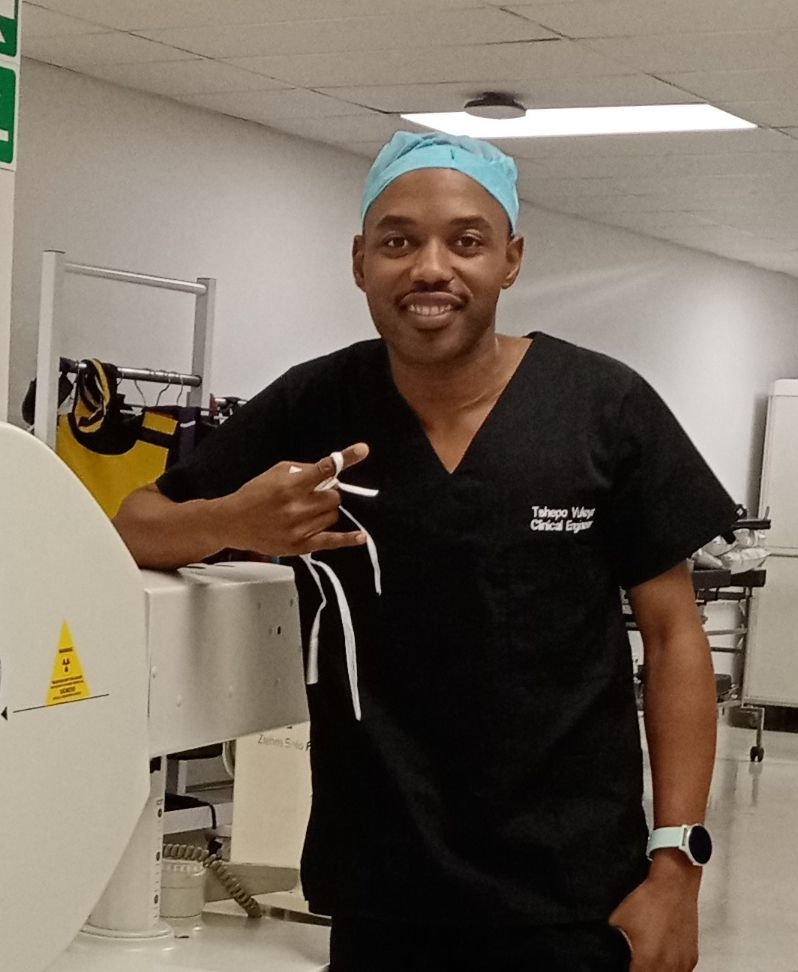
Tshepo Vincent Vukeya is a Biomedical Engineer specializing in Clinical Engineering within the healthcare and technology sectors. He holds a National Diploma in Electrical Engineering (Clinical Engineering) from Tshwane University of Technology. With a passion for leveraging technology to enhance patient care, Tshepo has worked across various roles, from patient monitoring systems to In Vitro Diagnostics. His expertise includes medical device maintenance, regulatory compliance, and AI-driven innovations in healthcare technology.