There is something deeply intimidating about real estate from the outside. For many people, it looks like an industry built on polished show houses, big commissions and confident personalities who always know what they are doing. But behind the listings, sold boards and social media marketing is a career that demands patience, emotional intelligence, consistency and the ability to keep going even when results are slow.
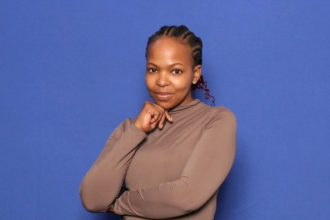
Today, she is a property practitioner working in the Western Cape market and the founder of the Young Agents Network. She helps people navigate one of the biggest financial decisions of their lives while also creating space for younger professionals in an industry that can feel intimidating to break into. But her journey into real estate was not carefully mapped out from the beginning. In fact, it was never on her radar at all.
A path she did not plan
Shene describes herself as someone who was academic at school and focused on doing well. Like many young people, she assumed life would follow a traditional route. She would study, get a qualification, and eventually find a job. The problem was that she did not yet know what that job would be.
Real estate was not the dream. It was not even part of the plan.
Although property had always been in her family, with both her parents spending more than two decades in the industry, she admits that growing up she never truly understood what they did. After school, she went to the Netherlands to work as an au pair, but when the COVID-19 pandemic disrupted everything, she had to return to South Africa after only a few months. That sudden change shifted the direction of her life.
Back home, she took on different admin jobs and even started a small business selling rusks. Real estate only entered the picture later, when her parents joined eXp Realty and introduced her to the opportunity. What began as something to try eventually became something much more meaningful. It was through actually doing the work that she discovered her passion for the industry.
Starting young in a commission-based world
Entering a commission-based industry at a young age is not for the faint-hearted. There is no guaranteed salary, no easy path to credibility, and no promise that things will work out quickly. For Shene, stepping into that world was made possible by two things: support and structure.
Joining eXp Realty gave her access to systems and support that made the industry feel less overwhelming. At the same time, she had guidance from her parents, who had years of experience, and encouragement from her then-boyfriend, now fiancé, who believed in her from the start.
Even with all that support, the early days were not easy.
Her first year and a half in real estate was slow. It was a season of learning, adjusting, and doubting herself. There were days when the uncertainty of the career weighed heavily. Bills still had to be paid, and the pressure of making a living from commission was very real. But even in those quiet seasons, she could see that the work was rewarding. It involved people, emotion, trust, and impact. That deeper purpose kept her going when results were not coming fast enough.
Building skill without the “perfect” route
Shene’s story challenges the idea that there is only one respectable way to build a career. She started studying Food Science at Stellenbosch University, but after one year she realized it was not the right fit for her. For a long time, matric was the only formal qualification behind her name.
Instead of seeing that as the end of the road, she built herself from the ground up.
She learned practical work ethic through admin roles. She sharpened her people skills in day-to-day jobs. She taught herself social media marketing and digital design through online courses and YouTube. And when she entered real estate, she learned by doing: meeting clients, working in the field, making mistakes, asking questions, and staying teachable.
By the end of last year, she had qualified as a full-status property practitioner. Her journey is proof that hands-on experience, discipline, and a willingness to learn can build real credibility over time.
What the job really looks like
When people think about real estate, they often picture glamorous show days, stylish homes, and handing over keys. But the reality is much more layered.
Shene starts her day with Bible study, something she says keeps her grounded and centered. Faith plays a major role in how she approaches both her work and her life. From there, her day can include growing her database, following up with past clients, creating content for social media, preparing valuation estimates, drafting offers to purchase, meeting clients to sign documents, and keeping up with local market trends.
A major part of the job that people do not see is lead generation. Before a property ever goes on the market, there is often a long trail of phone calls, follow-ups, conversations, rejection, and consistency behind the scenes. The listing is the visible part. The effort it took to get there is what most people never witness.
She is honest about the emotional side of the work too. Real estate is a relationship business. It requires patience, resilience, organization, and the ability not to take everything personally. Property transactions are deeply emotional for many clients, and that means agents need more than sales skills. They need emotional intelligence.
Property is about more than selling houses
One of the strongest parts of Shene’s interview is the way she breaks down property ownership in simple, accessible terms. For many young adults, buying property feels impossible, confusing, or far out of reach. She believes part of that fear comes from not being educated on the process.
One of the first steps she recommends for a first-time buyer is getting pre-qualified through a bond originator. This gives buyers a realistic view of what they can afford before they fall in love with a property they may not actually be able to buy. It also helps remove some of the fear and uncertainty around the process.
She also highlights the costs people often overlook. Buying a property is not only about affording the monthly bond repayment. Buyers also need to consider transfer costs, bond registration costs, levies if the property is in a complex, rates and taxes, and even moving costs. These expenses can catch people off guard if they are only focused on the purchase price.
At the same time, Shene wants people to know that fear should not stop them from learning. Even if someone is not ready to buy yet, getting clarity on where they stand financially can be empowering. It can show them what needs to improve and give them a plan to work toward.
Making room for younger voices
As a young woman entering the property industry, Shene often found herself in spaces where she did not feel like she fully belonged. That experience led her to create the Young Agents Network, a platform intended to build community for younger agents or newer agents who may also be looking for support, belonging, and shared experience.
It came from a simple realization: if the space she needed did not exist, perhaps she could create it.
That decision says a lot about the kind of professional she is becoming. She is not only focused on building her own success, but also on opening the door wider for others.
Lessons from the slow seasons
One of the most striking parts of her story is that it took her about a year and a half to get her first own listing. In an age where people are constantly exposed to overnight success stories, that kind of honesty matters.
She spent that season learning the industry, building confidence, and working with buyers before sellers were ready to trust her with their properties. As a young agent, credibility did not come automatically. She had to earn it slowly.
Her advice to new agents is simple but powerful: do not stop. There will be many no’s before the first yes. Be patient with yourself. Stay consistent. Keep doing the work even when it feels like nothing is happening yet.
That lesson reaches beyond real estate. It speaks to entrepreneurship, career-building, and adulthood in general. Many of the things worth having take longer than we expect.
Growth, freedom and legacy
For Shene, growth is about more than money or titles. It looks like freedom with her time, greater financial stability, being present with family, and creating a life where urgent work does not constantly steal every moment. It also means being able to travel, meet people, and make a positive impact wherever she can.
The legacy she wants to leave in property is rooted in hard work, consistency, and showing that age does not define ability. She wants people to see that being young does not mean being incapable, and that there is room to build something meaningful even if you do not begin with a perfect plan.
Her story is especially relevant for young people trying to figure out adulthood in real time. It reminds us that career paths can unfold in unexpected ways, that practical learning matters, and that you do not need to have everything figured out before you start.
Sometimes the biggest shift happens when you simply begin, learn on the go, and keep showing up.