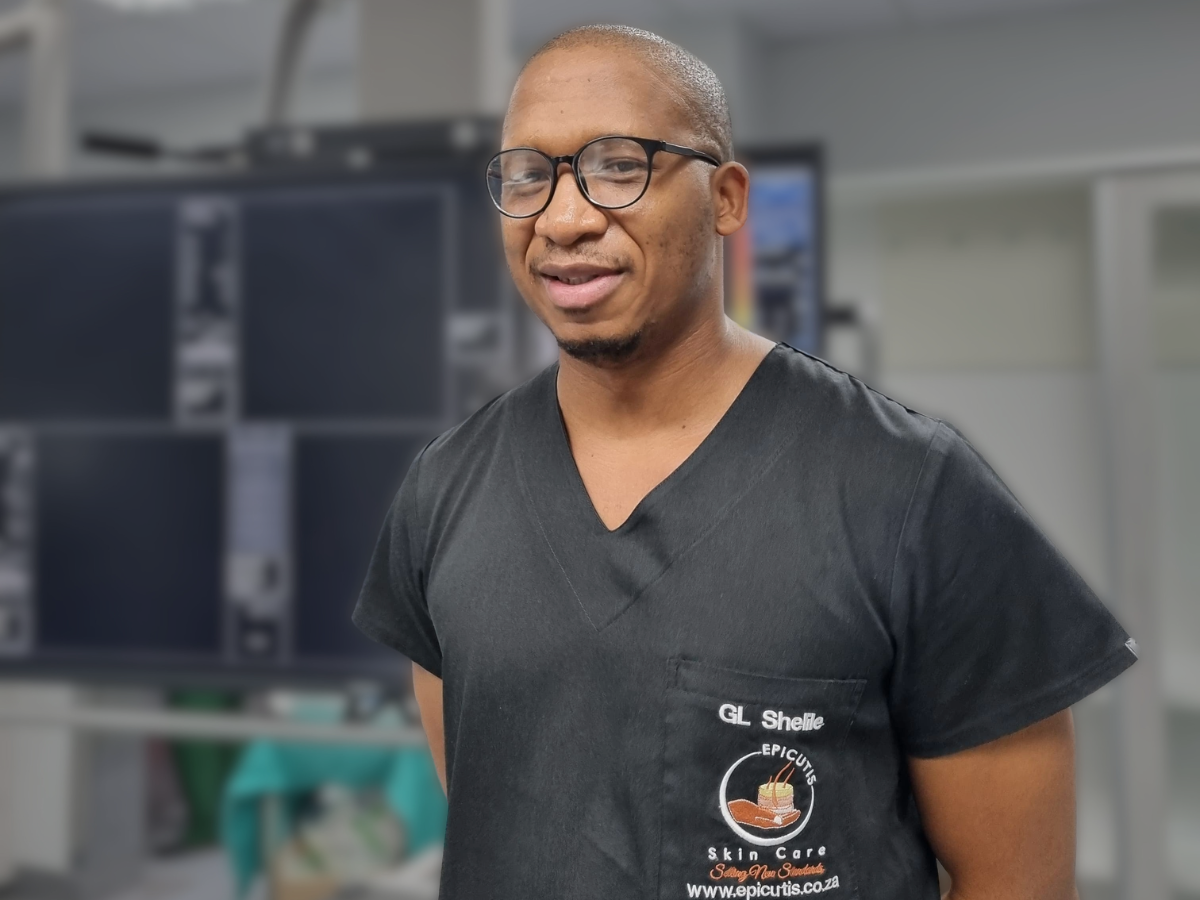
There are some people who choose a profession, and then there are those who seem to have always known where they were meant to be. For Dr. Lefa Shelile, medicine was never a random career choice. Long before the title, the scrubs and the operating theatre, he was already a young boy from Welkom with a deep sense that he wanted to become a doctor. More than that, he wanted to become a surgeon.
Today, Dr. Shelile is a qualified general surgeon training in vascular surgery, a field focused on blood vessels and life-saving interventions that often sit on the edge of urgency. But behind the title is a story rooted in discipline, sacrifice, curiosity and a desire to serve beyond personal success. His journey offers a grounded look into what it really takes to build a career in medicine, especially in a demanding specialty like surgery.
A Dream that Started Early
For some people, career clarity comes later in life. For Dr. Shelile, it came early. He says that for as long as he can remember, he always wanted to do medicine and surgery. There was no close family member in the profession, but the image of doctors as respected people who save lives stayed with him from a young age.
Born and raised in Welkom and the first of four children, he describes himself as someone who wants peace and success not only for himself, but for South Africa and the continent at large. That sense of purpose shows up clearly in the way he speaks about medicine. His work is not just about status or achievement. It is about doing meaningful work in spaces where people are often at their most vulnerable.
The Reality of Medical School
Like many high-achieving young people, Dr. Shelile entered university with ambition. But ambition alone does not make medical school easy. He studied medicine at the University of the Free State, where the programme is known for being especially intense. Unlike most other institutions that offer medicine over six years, UFS offers it in five, which means students are pushed into the demands of medicine very quickly.
The transition was tough. Coming from a township school, he had to adapt not only to the heavy workload, but also to a completely different environment filled with people from different backgrounds and life experiences. On top of the academic pressure, there were financial challenges too. Even with a bursary covering tuition, everyday needs like textbooks, transport, and food could still become stressful.
Medical school also exposed him to difficult personal realities, including experiences of racism that were new and shocking to him. Those moments shaped how he saw institutions, leadership, and the importance of advocating for yourself and others. Still, despite the challenges, he speaks about that period with gratitude. The friendships he formed and the support structures he built helped carry him through one of the most demanding chapters of his life.
Learning that Medicine is Bigger than the Degree
One of the misconceptions many people have about medicine is that students spend years only learning theory and only start doing practical work once they qualify. Dr. Shelile explains that this is far from the truth. In the clinical years of medical school, students spend significant time in hospitals, doing ward work, attending calls, and being exposed to real patient care.
That practical exposure matters because medicine is not the kind of profession where you graduate and suddenly know everything. After medical school comes internship and community service, both of which are mandatory before a doctor can practise independently. According to Dr. Shelile, this is where “real doctoring” begins.
Internship is more structured, with doctors rotating through different departments under supervision. Community service, on the other hand, can vary depending on where you are placed. Some doctors work in under-resourced hospitals where they must handle a wide range of cases with limited support. Others work in bigger institutions where they can get more mentorship and learn more closely about their interests.
This stage can be both formative and overwhelming. It is where confidence is tested, mistakes become lessons, and the responsibility of being the person patients look to becomes very real.
The Emotional Weight Behind the White Coat
Popular culture often portrays doctors as detached, emotionless, or somehow immune to the pain around them. Dr. Shelile challenges that idea. He explains that doctors do care deeply, but the nature of the work forces them to develop coping mechanisms.
When patients die, especially young people or children, the impact is real. But doctors cannot stop for every loss because there are always more patients depending on them. The work does not pause for grief. So many healthcare workers learn to compartmentalise, suppress, or delay their emotions just to keep functioning.
That emotional burden is one of the less visible parts of medicine. It also connects to a bigger issue Dr. Shelile speaks openly about: the lack of mental health support for doctors. Hospitals, he says, are often reactive rather than proactive. There may be some response after a crisis, but not nearly enough ongoing support. For many doctors, overwork, exhaustion, emotional trauma, and lack of structured mental health care create a dangerous environment that can affect both wellbeing and relationships.
Falling in Love with Surgery
Although he always knew he wanted to be a surgeon, Dr. Shelile’s passion for the field became more concrete through experience. An early opportunity to observe a vascular surgery procedure in theatre left a lasting impression on him, offering a firsthand look at the skill, precision and composure required in the operating room.
The first case he scrubbed into was an abdominal aortic aneurysm operation, a high-stakes procedure involving major blood vessels and the risk of severe bleeding. Watching the surgical team operate with calm, precision, and control left a lasting impression on him. It was exciting, overwhelming, and confirming all at once.
For Dr. Shelile, surgery stands apart because it is immediate and hands-on. In many other medical specialties, diagnosis is followed by medication and time. In surgery, your hands become part of the intervention. You do something directly, and that action can save a life. That is what drew him in: the ability to physically step into a crisis and change an outcome.
Why Vascular Surgery?
Now a qualified general surgeon training in vascular surgery, Dr. Shelile has moved into a field that deals with blood vessels throughout the body. In simple terms, vascular surgeons treat problems involving arteries and veins, especially when blood flow is blocked or when a vessel becomes dangerously enlarged.
It is a specialty that demands technical skill, speed, and composure. Many of the patients are older adults dealing with blocked arteries, aneurysms, or circulation problems that can threaten limbs or life itself. Vascular surgeons work to restore blood flow, prevent rupture, and save both lives and quality of life.
What draws him to vascular surgery is not only the science of it, but also the intensity. These are often high-pressure cases where a patient can deteriorate very quickly if something goes wrong. He speaks honestly about enjoying that high-stakes environment, where every move matters and where focus becomes absolute.
His days now look very different from his time as a registrar. Rather than handling the broad demands of general surgery, he is now focused specifically on vascular patients. His work includes clinics, ward rounds, teaching juniors, theatre days, and emergency cases that can interrupt any schedule. Some days stretch well beyond 24 hours.
Research, Leadership, and Building Beyond the Operating Room
Dr. Shelile’s career does not stop in theatre. He has also contributed to research, including publishing in the Journal of Vascular Surgery Cases, Innovations and Techniques and the South African Journal of Surgery. For him, research is not an optional extra. It is essential for any doctor who wants to grow, stay relevant, and have impact beyond their immediate hospital.
He believes the future belongs to healthcare professionals who can combine practical skill with academic contribution. In a world where evidence shapes practice and reputation, research matters.
Leadership is another important part of his story. His experiences in student spaces and later roles, including serving in leadership structures for surgical trainees, taught him that healthcare cannot afford to ignore leadership and policy. Doctors may prefer to focus only on patients, but the systems around healthcare affect everything from job opportunities to hospital conditions to public trust in the profession.
He argues that when doctors stay silent, poor leadership and bad decision-making can damage the profession and ultimately harm patients. That is why he believes more doctors should step into leadership roles, not for power, but for responsibility.
Mentorship and the Importance of Work Ethic
Mentorship is personal for Dr. Shelile because he knows how much easier the journey could have been with stronger guidance. While he did have important mentors, he also understands what it feels like to need more support than you are getting.
That is why he now mentors young people interested in academia and healthcare. He wants to offer the kind of guidance he wishes he had received more consistently. And when it comes to what he tries to instil in students, his answer is clear: work ethic.
For him, success in medicine is not only about intelligence. It is also about being reliable, disciplined, honest, prepared, and consistent. Being where you are supposed to be, doing what you are supposed to do, and taking responsibility for the small things can set the foundation for greatness.
It is a lesson that stretches well beyond medicine. In any field, talent may open the door, but work ethic is what keeps you growing.
Life Outside Medicine Matters too
As intense as his profession is, Dr. Shelile also makes space for interests beyond medicine. One of the most surprising is aviation. He holds a student private pilot licence and became interested in flying after watching aircraft crash investigations and learning more about how aviation systems work.
It is an unusual but fitting interest for someone drawn to high-stakes environments, technical detail, and precision. He hopes to complete his pilot’s licence in future and perhaps one day own a small private plane.
More importantly, this part of his life highlights something many young professionals need to hear: having passions outside your work matters. In a demanding career like medicine, outside interests are not distractions. They are often part of what keeps people mentally and emotionally grounded.
Advice for Future Surgeons
For any high school student dreaming of medicine or surgery, Dr. Shelile’s advice is both encouraging and honest. He believes you can achieve anything you put your mind to, no matter how difficult it looks from the outside. But he also warns young people to make sure the dream is truly theirs.
Medicine is too demanding to pursue for someone else’s approval. The profession comes with sacrifice, disappointment, pressure, and emotional weight. If your heart is not really in it, that reality can become unbearable. But for those who are genuinely called to it, the work can be deeply meaningful.
The Legacy he Wants to Leave
Perhaps the most powerful part of Dr. Shelile’s story is not the title, the publications, or even the surgical ambition. It is the kind of legacy he wants to leave behind.
Earlier in life, he says, he may have wanted to be world-famous. Now, what matters more is being known for doing good, especially for people who have the fewest options. He speaks with conviction about poor communities, access to care, and the need for more doctors who remain committed to serving those who are often left behind.
It is a reminder that success is not only about how far you rise, but also about who benefits from your rise.