When people hear the word sustainability, they often think of reusable bags, organic labels or products marketed as “eco-friendly”. But behind those words lies a much more complicated reality, one that involves systems, power, people, culture, access, and the stories industries tell us about what is supposedly good for the planet.
That is exactly where Teresa Mungazi’s work lives.
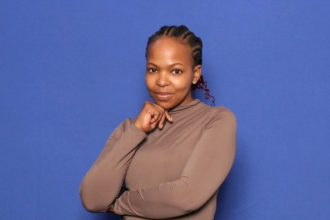
A Zimbabwean researcher, social entrepreneur, and PhD candidate in Food Systems at the University of Vermont, Teresa is building a career at the intersection of sustainability and consumer behavior. Her research focuses on the evolving hemp industry in the United States, but her work reaches far beyond one crop. At its heart, it asks bigger questions: How do consumers decide what is sustainable? How do marketing messages shape public perception? And how do we build food systems that are not only efficient, but ethical, thoughtful and truly beneficial for people and the planet?
A Foundation Built in Zimbabwe
Teresa describes herself first as a Zimbabwean woman shaped by her home country, her education, and her work with farming communities. Her academic journey began at the University of Zimbabwe, where she studied Applied Environmental Science. That background gave her a strong grounding in natural sciences and helped her understand ecological systems and environmental integrity at a systems level.
At that stage, her work was largely scientific. But over time, her curiosity expanded. She became increasingly interested not only in how food is produced, but also in why people choose certain foods, reject others, and respond to products in particular ways.
That shift became even more defined when she went on to pursue a master’s degree in Sustainable Agriculture and Food Security at Newcastle University in England. Teresa earned this opportunity through the Chevening Scholarship, which recognized her leadership potential and the work she had already been doing in Zimbabwe through a social enterprise she co-founded.
Her master’s research focused on consumer perceptions of baobab in the UK. It was a turning point. By combining sensory evaluations and focus groups, she moved from a purely natural science approach into the social and behavioral dimensions of food systems. It was no longer just about what food is, but how people understand it, value it, and respond to it.
Why Research Became the Calling
For Teresa, pursuing a PhD was not simply about collecting another qualification. It was about realizing how powerful research can be when it is used well.
During her master’s studies, she saw that research has the potential to influence policy, shape industries, and contribute to real-world solutions. Food, she realized, sits at the center of everyday life and at the center of some of the world’s biggest challenges — from climate change to food insecurity to sustainability.
That realization pushed her further. She wanted to produce work that could contribute at scale: research that examines how food is produced, processed, marketed, and consumed, and how those systems can become more sustainable over time.
Today, as a PhD candidate in Food Systems at the University of Vermont, Teresa is doing exactly that.
What Food Systems Really Means
For someone unfamiliar with the term, food systems might sound technical or distant. Teresa explains it differently. To her, food systems are about relationships.
They are the full web that connects production, processing, distribution, and consumption — but also the social, cultural, and institutional forces that shape those processes. It is not just about what happens on a farm or in a supermarket. It is about how all the moving parts connect, influence each other, and affect people’s lives.
This way of thinking has shaped Teresa’s work for years. Whether she was linking small-scale farmers to markets in Zimbabwe or studying consumer responses to baobab in the UK, she was always working within a broader system — one where supply, demand, culture, marketing, and access are constantly interacting.
That systems thinking is especially important today, when food systems around the world face major challenges. Teresa points to environmental degradation, pollution, climate change, and a growing disconnect between people and the origins of their food. Many consumers know how to buy food, but not necessarily how it was produced, what it cost the environment, or who benefited from it.
For her, the challenge is not only to produce enough food, but to do so in a way that keeps the planet, the economy, and people healthy at the same time.
Why Hemp Became the Focus
Teresa’s PhD research focuses on the hemp sector in the United States, and at first glance, that might seem like an unexpected path. But in many ways, it is a natural continuation of the work she has always done.
Her earlier research explored novel foods and underutilized indigenous crops — products that are nutritious, adaptable, and full of potential, but often overlooked or misunderstood. Hemp fits into that pattern. In the United States, hemp re-emerged onto the market through the 2018 Farm Bill, after having been banned for many years. That made it a particularly interesting product to study: one with sustainability economic potential, a complicated public image, and a rapidly developing market.
Hemp is often described as a miracle crop because of its many uses. It can be used in textiles, food, construction materials, personal care products, paper, rope, biofuels, and more. Its versatility has made it attractive as a potential sustainable alternative to more conventional products.
But Teresa’s work asks a more careful question: can hemp live up to its sustainable potential, or will some of that image continue to be driven by the stories companies tell?
The Power of Marketing and Corporate Storytelling
One of the most fascinating aspects of Teresa’s research is her focus on corporate storytelling.
In simple terms, corporate storytelling is the way companies use narratives to make people feel something about a product. It is the difference between selling an item and selling an idea. A company may not just tell you that a product exists — it may tell you that buying it makes you environmentally responsible, socially aware, or part of a better future.
That matters deeply in industries like hemp, where sustainability is often central to the brand message.
Teresa explains that hemp is commonly marketed as a sustainability powerhouse — a crop with low water use, carbon-sequestration potential, and endless possibilities across industries. These claims are powerful, and they can shape consumer perceptions very effectively. In some cases, consumers begin to see hemp through what researchers call a halo effect: because the product is framed as good in one way, people may overlook its complexities or assume all aspects of it are automatically sustainable.
That does not mean hemp has no sustainability value. Teresa is clear that it does have strong potential. But its actual sustainability depends on how it is grown, processed, transported, and integrated into supply chains. Like many products, it can be marketed as a universal solution long before its full life cycle is being critically examined.
Her work sits in that tension — between potential and hype, between sustainability in practice and sustainability as a brand narrative.
Marijuana Entanglement, Consumer Behavior, and the Bigger Picture
Another key part of Teresa’s research looks at how consumers respond to hemp and why public understanding is still mixed.
Because hemp and marijuana come from the same species, many people still confuse the two, even though industrial hemp is a separate category with far lower THC levels and very different uses. That confusion affects consumer trust and can shape how willing people are to embrace hemp-based products.
Teresa’s interest lies not only in whether people buy a product, but in why they respond the way they do. What narratives influence them? What assumptions are they carrying? What social or cultural meanings shape their behavior?
These are the kinds of questions that make her research especially relevant in a world where brands are becoming increasingly skilled at selling values, not just products.
Ubuntu, Native Science, and a Different Way of Seeing Sustainability
Teresa’s work is also influenced by Ubuntu philosophy and ideas from Native Science, both of which shape how she understands sustainability.
As a Zimbabwean woman and a Bantu person, Teresa brings an approach grounded in interconnectedness. Ubuntu emphasizes that our lives, choices, and well-being are tied to one another. In that view, sustainability is not only about technical solutions or efficient systems. It is also about relationships, responsibility, intention, and understanding the wider effects of our actions.
That perspective aligns naturally with food systems thinking. What one person consumes affects production. What a business chooses affects the environment. What a farmer grows affects a household, a market, and a community. Everything is connected.
Teresa also highlights the importance of asking why. Not just what is happening, but why it is happening, what motivations are behind it, and what long-term impact it may have. That habit of deeper questioning is something she sees as central both to her cultural grounding and to her research practice.
Life as a PhD Researcher
When many people picture a PhD, they imagine endless reading and stressful deadlines — and Teresa confirms that there is a lot of reading. But she also offers a fuller picture.
A PhD journey changes over time. In the earlier years, there may be coursework, group work, writing assignments, lab meetings, and teaching responsibilities. In the US, a PhD is considered a full-time job where one works as a research assistant and/or teaching assistant.
As students progress, the work becomes more focused on original research: collecting data, analyzing findings, writing papers for publication, presenting at conferences, collaborating with peers and mentors, and refining ideas.
Teresa is currently in the later stage of her PhD journey. Her work now involves data collection, academic writing, publications, presentations, and collaborations. She is also thinking beyond the dissertation itself — toward policy briefs, sector development, and how her research can influence a more sustainable and viable hemp industry in the northeastern United States.
What People Do Not See About the PhD Journey
Behind the academic progress and research milestones, Teresa says there are struggles that many people do not see.
One of the biggest is imposter syndrome — that quiet self-doubt that can make even capable people question their intelligence, their direction, or whether they truly belong in the room. Add to that the realities of research itself: difficult data, shifting ideas, the pressure to refine your work, and the challenge of balancing ambition with practicality.
Like many PhD students, Teresa has had to navigate the inner work as much as the academic work. Growth in this space is not only intellectual. It is personal.
Natural Hub and the Entrepreneurial Chapter
Before her current research, Teresa also co-founded a Zimbabwean social enterprise called Natural Hub, which focused on promoting underutilized native foods and linking small-scale farmers to markets.
The idea came from her work in the NGO sector and her recognition that many indigenous foods were both highly valuable and deeply underappreciated. These foods were nutritious, geographically adapted, and often more climate-resilient — yet many were seen as old-fashioned or associated with poverty.
Natural Hub aimed to change that. It created a platform where products from different farmers and producers could be brought together and made more visible to consumers. The enterprise also supported farmers by helping connect them to urban markets and, in some cases, by assisting with processing and meeting standards needed for wider trade.
Through that work, Teresa learned how deeply structural the challenges in food systems can be. Small-scale farmers may have quality products, but still face exploitation, weak market access, poor pricing systems, and consumer bias. She saw firsthand that creating impact requires more than good intentions — it requires context-sensitive thinking, relationship-building, and an understanding of the deeper forces at play.
Lessons for Young People Interested in Sustainability
When Teresa speaks to students and young professionals interested in sustainability, research, or food systems, her advice is both practical and thoughtful.
She encourages people to stay curious, but also critical. Sustainability may sound like a simple idea, but in practice it is complex. Young people should ask deeper questions, question narratives, and avoid accepting labels at face value.
She also emphasizes the importance of interdisciplinarity — the ability to connect ideas across different fields. Some of the most meaningful insights in her own work have come from combining natural sciences, social sciences, and lived experience.
And finally, she speaks about reflexivity: the need to reflect on your own background, assumptions, and values, and to recognize how those shape the questions you ask and the solutions you pursue.
For Teresa, good research is not just about producing knowledge. It is about producing knowledge that can lead to meaningful change.