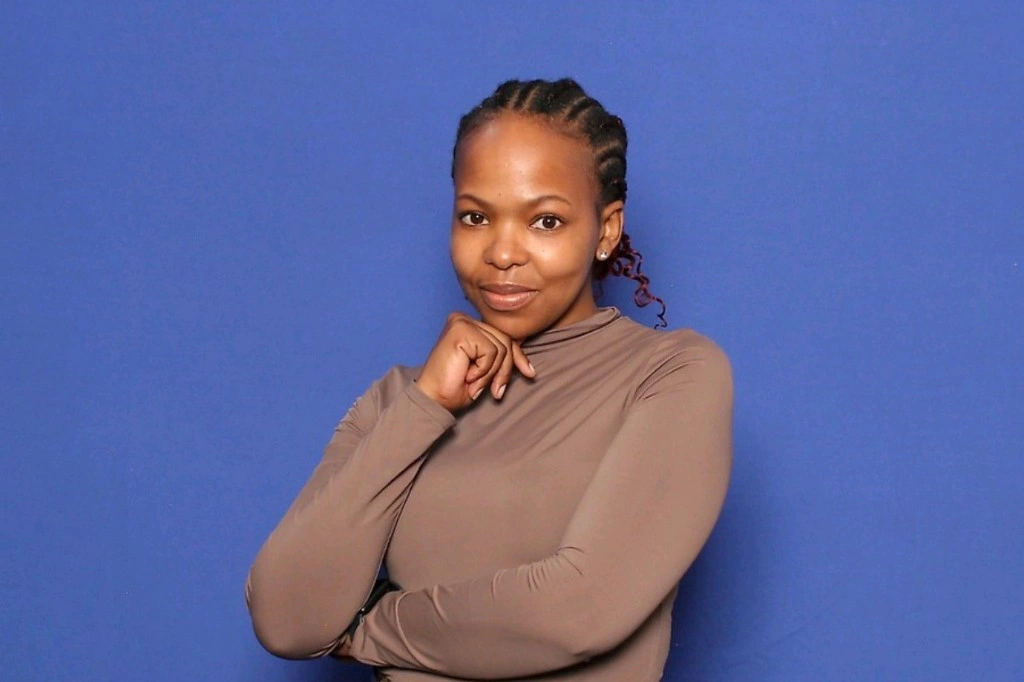
Before Corina Rasodi had the language to describe entrepreneurship, business analysis or solutioning, she already had a strong instinct for finding opportunities and turning ideas into something tangible. As a child, she imagined herself as a businesswoman in a suit, even if she had no idea what that business would be. More than a decade after entering banking, that curiosity has taken her through operations, project spaces, transformation, process redesign and business analysis, eventually leading her into solutioning and technical business analysis.
There Was Never a Perfect Career Blueprint
Corina’s career did not begin with a carefully designed five-year plan. In fact, she is quite open about the fact that there was no master plan at all. What she had was curiosity, a desire to understand how businesses worked and a willingness to put herself in environments where she could learn. “Definitely figured it out as I went,” she says, describing her career path as a journey of self-discovery rather than a roadmap.
That willingness to figure things out became particularly important because Corina did not grow up surrounded by entrepreneurs or people who could simply hand her a blueprint for corporate life. She entered the working world knowing what she wanted to explore, but not necessarily knowing exactly where it would take her. Her first exposure to work came at 16, when she entered retail to build her own savings, an experience her mother, who worked in recruitment, also saw as an opportunity to develop her character and learn how to work with different personalities. By 19, Corina had entered banking as a temporary employee, working in a back-office environment that supported frontline branches.
Those early experiences taught her something that would become a recurring theme throughout her career: the biggest part of professional development is often the work you do on yourself. Looking back, she says, “Managing people, navigating people is 90% managing yourself. Very little to do with managing the next person.” That idea has followed her from her earliest days in the workplace into her current role, where stakeholder management, communication and understanding people are just as important as understanding systems and processes.
Experience Came Before the Qualification
For Corina, education was not a straight line either. She began studying towards an LLB but eventually realised that law was not where her passion lay. Instead of continuing simply because she had already started, she stepped back and gave herself space to understand what she actually wanted from her education and career. She did not want a qualification simply to add another line to her CV; she wanted to understand how what she learned could be applied in the real world.
That decision became important because her professional experience had already started exposing her to ideation, analysis and solutioning. Once she had a clearer understanding of the direction she wanted to take, her company gave her the opportunity to study through a bursary, allowing her to formalise knowledge that she had already been developing through experience. Her studies in strategic management gave her a broader understanding of business strategy, including how organisations grow, develop and navigate different stages of their life cycles. For Corina, education became something that complemented her experience rather than something that existed separately from it.
This is also why she does not see the parts of her educational journey that did not lead directly to her current role as wasted. Some of the modules she encountered during her BCom studies, for example, still became useful later. “I’m very, very big on nothing that you go through is wasted,” she says. It is a philosophy that offers a different way of looking at career uncertainty: sometimes an experience only makes sense once you are further down the road.
Learning How to Take Up Space
Entering corporate life while young came with another challenge: learning that professional spaces were not necessarily as intimidating as they first appeared. Growing up, Corina had viewed adults as figures to be respected and revered, and that shaped how she initially interacted with senior people in the workplace. One example was something as simple as eye contact, which she had been taught culturally could be considered disrespectful, while in a corporate environment it was interpreted differently.
She had to learn how to navigate those differences without losing who she was. That meant learning how to challenge ideas respectfully, participate in difficult conversations and become more comfortable in rooms where she initially felt she did not belong. These were not technical skills that could necessarily be learned from a textbook, but they became essential to her development. “It gets better with practice though,” she says, a simple reminder that confidence is often built through repetition rather than waiting for the moment when you suddenly feel ready.
That lesson would become particularly valuable as her career moved closer to technology and solution design. The further she progressed, the more she needed to communicate ideas, engage stakeholders and make sense of competing perspectives. Her technical development mattered, but so did her ability to understand herself and the people around her. For Corina, career progression has never been solely about accumulating technical knowledge; it has also been about becoming someone capable of operating effectively in increasingly complex environments.
Mentorship Is Bigger Than One Person
Corina’s understanding of mentorship has also changed over time. At first, she imagined mentorship as having one person who regularly meets with you, gives you advice and helps guide your career. While she still believes that type of mentorship can be valuable, her own experience taught her that learning can happen through many different people and situations. “What really helped me and accelerated the process was to find mentorship in different pockets of your environment,” she explains.
That could mean watching someone who already occupies a role you aspire to, observing how they communicate, noticing how they manage relationships or paying attention to how they protect their own wellbeing. It could also mean learning from someone whose approach you do not necessarily want to copy. Corina believes even those experiences have value because they help you identify what you do and do not want for yourself. “Nothing is wasted,” she says, because even an experience that shows you what not to become can help sharpen your understanding of what you want.
Her belief in mentorship is also something she now wants to give back. She spoke about an opportunity to work with an organisation connecting professionals with Grade 12 and first-year students, particularly around helping young people understand the difference between studying for a career and actually working in that career. For Corina, that distinction matters because formal education is only one part of becoming work-ready. The workplace also demands communication, confidence, relationship-building and other soft skills that are difficult to learn from a qualification alone.
The Career Is More Than the Job Title
Today, Corina works as a Solutioning Subject Matter Expert, a title that might leave someone scrolling through LinkedIn wondering exactly what it means. In her case, the role is essentially business analysis with a focus on technical enablement. The title used by her organisation may not immediately suggest “business analyst”, but the underlying work involves understanding business problems, identifying gaps, engaging stakeholders and helping develop solutions that can ultimately be enabled through technology.
So what does that actually look like in practice? A typical piece of work begins with a business problem and a proposed solution, but Corina’s job is not simply to accept that proposal and move straight into implementation. She needs to understand the root cause of the problem, examine the current process, identify the gap and determine what constraints exist. From there, she develops what she calls a discovery document, which becomes the “North Star” for the solutioning process.
That document helps answer some fundamental questions: What is the actual problem? What caused it? What is the proposed solution addressing? Who needs to be involved? What are the constraints? What does success look like? Answering those questions requires engagement with different stakeholders across areas such as risk, governance, technology and product. Once the proposed solution has been developed and the necessary stakeholders have signed off, Corina supports the technology and feature teams as they move towards implementation.
In other words, solutioning is not simply about coming up with a clever idea. It is about understanding the problem deeply enough to design a solution that can work within the realities of a business. It sits at the intersection of business needs, technology, people, processes and organisational constraints. That makes communication and stakeholder management just as important as analytical thinking.
When Everyone Has a Different Answer
One of the most interesting parts of Corina’s work is what happens when people disagree. In large organisations, different teams naturally have different priorities, responsibilities and measures of success. A product team may be focused on its objectives, while risk or governance may have concerns that need to be addressed before a solution can move forward. For Corina, solving those disagreements starts with understanding what sits behind each person’s position rather than simply labelling someone as difficult.
“Everybody wants their product to succeed. Everybody wants their initiative to do well,” she explains. Stakeholders are often protecting their own responsibilities and working towards their own KPIs, which means their priorities can sometimes conflict. Her role is to bring the relevant people into the same conversation, understand what each side needs and find a way forward while considering the impact on the wider business.
This is where her approach to business analysis becomes particularly human. Instead of asking why someone is refusing to cooperate, she looks at what is behind their decision and how that concern can be protected while still moving the solution forward. It requires negotiation, listening and the ability to see the bigger picture without ignoring the smaller details. In a role built around solving problems, understanding people can sometimes be just as important as understanding processes.
Good Ideas Still Need to Be Tested
One of the lessons Corina learned through project work is that being experienced or confident in your thinking does not automatically mean you are right. During periods of rapid prototyping, her teams sometimes worked from assumptions about why a business problem existed and how customers might respond to a proposed solution. They could develop something quickly, test it with users and learn from what actually happened. Sometimes an idea she expected customers to dislike received a positive response instead.
That experience reinforced the importance of validation. Expertise gives you a foundation from which to make decisions, but assumptions still need to be tested against evidence. “It’s always important just to make sure that you have validated that and you have data that backs that decision,” she says. For anyone interested in business analysis, product development or technology, it is an important lesson: being able to make an argument is not the same as being able to prove that the solution works.
Her work therefore requires a balance between instinct and evidence. You need enough experience to ask the right questions, but enough humility to accept that the answer may surprise you. A solution that looks perfect in a meeting room still has to work for the person who eventually uses it. That is where understanding users, processes and data becomes critical.
You Do Not Have to Be an Extrovert to Work in Tech
There is another misconception Corina challenges: that people working in technology, business analysis or stakeholder-heavy roles have to be naturally outgoing. Corina describes herself as an introvert, but she also enjoys people, social environments and engaging with others. The difference, she explains, is that social interaction can drain an introvert’s social battery even when they genuinely enjoy the interaction.
For her, being an introvert does not mean avoiding people. In fact, she considers people an important part of how she learns and grows, particularly because there are soft skills that cannot be acquired simply through reading or research. At the same time, she recognises that different personalities will have different areas they need to develop. An extroverted person might need to become more comfortable sitting with data and documentation, while a quieter person may need to work on approaching people and becoming more comfortable speaking up.
Her message is simple and powerful: “Any person can do anything. You just have to believe you can.” That does not mean believing that everything will come easily, but rather recognising that skills can be developed through deliberate effort. For someone who is shy or uncertain about entering a field like business analysis, her story suggests that personality is not a fixed barrier; it is simply one part of the starting point.
Becoming Comfortable With Being Uncomfortable
Like many professionals building a career in unfamiliar spaces, Corina has experienced imposter syndrome. But rather than viewing it as proof that she does not belong, she has come to see it as part of entering environments where she is still learning. She describes the feeling as looking around at people who appear to have everything figured out while forgetting that those people may simply have been doing the work for longer.
That perspective has helped her develop a different relationship with discomfort. “I’ve had to learn over time to be comfortable being uncomfortable,” she says. It is a particularly fitting philosophy for someone whose career has repeatedly involved moving into new spaces, learning new things and figuring out how to operate at a higher level. Rather than waiting until she feels completely prepared, she has learned that competence often comes after repeated exposure.
That same philosophy appears in the way she approaches personal development. Corina recommends having at least two meaningful check-ins with yourself during the year rather than allowing work and routine to consume all your energy. She suggests setting a big, ambitious goal, breaking it down into smaller tasks and returning later to assess whether you are actually moving forward. The exercise is designed to prevent someone from becoming trapped in the cycle of simply completing their nine-to-five responsibilities without deliberately investing in their own growth.
Ten Years in Banking, But Never the Same Career
Corina has now spent more than a decade in banking, but she is quick to point out that staying with one organisation has never meant doing the same job for ten years. Her career has moved through different functions and environments, allowing her to keep learning without necessarily having to leave the industry altogether. She sees this variety as one of the reasons she has remained engaged for so long.
Her experience also challenges the common idea that banking is limited to traditional financial roles. She points out that large financial institutions can have opportunities across technology, operations, hospitality, media, product and many other areas. For someone considering financial services as a career, that breadth is worth understanding. The industry can offer different pathways for people with different strengths, interests and ambitions.
But perhaps one of her biggest lessons from staying in the industry is the importance of relationship capital. “You’re never going to achieve anything, especially anything epic on your own. It’s always going to be a team effort,” she says. She believes consistent effort, being someone people enjoy working with, emotional intelligence and the ability to understand the room all contribute to building a career over time.
So, How Do You Start a Career in Business Analysis?
For someone watching Corina’s journey and wondering whether business analysis or technical business analysis could be a career path for them, her advice begins with something surprisingly simple: figure out what interests you. Business analysis is not one single career lane, and there are different areas someone can explore, including data analysis, technical business analysis, product and strategy. Corina herself experimented with coding before realising that becoming a developer was not what she wanted, while still knowing that she wanted to work in technology.
That distinction helped her find technical business analysis, a space where she could combine her interest in technology with her understanding of business and operations. For someone still unsure, she recommends gaining exposure rather than getting trapped in what she calls “analysis paralysis”. Short courses, shadowing professionals, reading, online simulations and conversations with people already working in the field can all help someone gather the information they need before making a bigger educational commitment.
Formal education can certainly help build a foundation, but Corina’s own story demonstrates that there are multiple ways to begin learning. Someone who cannot immediately pursue formal studies can still learn by staying close to professionals in the field, following industry conversations and deliberately using online platforms as learning tools. Her advice is to identify your niche first, then build your foundation around it. The important thing is to move from wondering about a career to collecting real experiences that help you make an informed decision.